
Veneers are the treatment of choice when several concerns need addressing at once — teeth that are stained beyond what whitening can lift, worn or uneven edges, small gaps, or teeth that appear crooked despite being healthy.
Because each veneer is fabricated individually, the shade, translucency, and shape are designed around your face rather than applied uniformly. At Rita Marroghi DDS, the goal is a smile that looks like your own at its best, not one that announces itself as dental work.
Traditional porcelain veneers require removing a thin layer of enamel — usually 0.3 to 0.7mm — from the front of each tooth so the veneer sits flush and does not look bulky.
This is permanent. Enamel does not grow back, and a tooth prepared for a veneer will always need a veneer or crown covering it. Veneers are a long-term commitment, and we discuss this fully with every patient before treatment begins.
If your concerns are limited to one or two small chips, dental bonding may achieve a good result without altering the tooth at all. We will tell you when that is the better option.
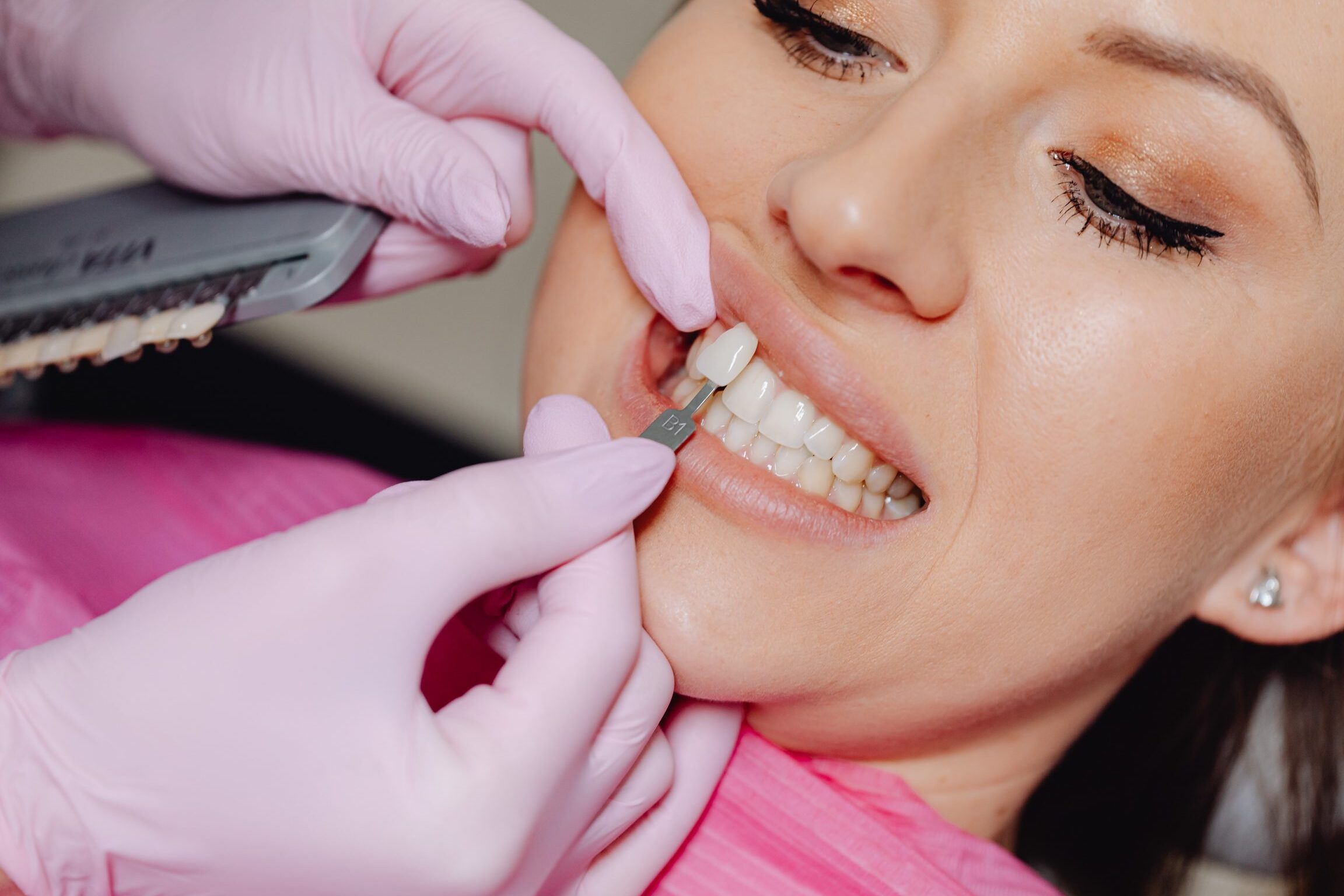
Veneer treatment typically involves two to three appointments over two to three weeks.
Consultation. Your dentist examines your teeth and gums, discusses the result you want, and confirms veneers are appropriate. Photographs and impressions are taken, and in some cases a preview is prepared so you can see the proposed shape before committing.
Preparation. The teeth are lightly reduced, final impressions are taken, and the shade is selected. Temporary veneers protect the prepared teeth while the permanent ones are made in the laboratory.
Placement. The temporaries are removed and each veneer is tried in to check fit, shade, and appearance before it is permanently bonded. Your bite is adjusted and the edges polished.
Veneers are cosmetic. Teeth with significant decay, large fillings, or gum disease need those issues treated first, and a crown may be more appropriate than a veneer where structure has been lost.
Veneers succeed or fail on planning. Shade, proportion, edge position, and the way the teeth relate to your lips and face all have to be decided before a single tooth is prepared.
Dr. Marroghi has over 25 years of cosmetic dentistry experience and plans each case around your facial features, working with the laboratory on shade and characterization so the result looks natural rather than uniform.
You can view examples of completed veneer cases in our Smile Gallery.
Porcelain is strong but not unbreakable, and the tooth beneath it can still decay:
Note that porcelain does not respond to whitening. If you plan to whiten your other teeth, do so before the veneer shade is selected.
Posted on GoogleTrustindex verifies that the original source of the review is Google. I had a dental crown done by dr. Rita Marroghi and honestly she explained everything before starting the procedure and made whole experience so comfortable. In my experience I found her the most gentle dentist in pontiac michigan.Posted on GoogleTrustindex verifies that the original source of the review is Google. Dr. Marroghi is the most caring, compassionate and professional dentist you can find.Posted on GoogleTrustindex verifies that the original source of the review is Google. I love all the girls that work here, especially Helen, they all make my day. I've had all my dental work done here in Pontiac, and I wouldn't trust no one else, but then. They treat you like family here.Posted on GoogleTrustindex verifies that the original source of the review is Google. Dr. Marroghi was amazing. I loved the office and would highly recommendPosted on GoogleTrustindex verifies that the original source of the review is Google. My experience was pleasant. Dr. Marroghi was very wonderful.Posted on GoogleTrustindex verifies that the original source of the review is Google. Very very nice place good workers good Doctor and very understanding and willing too do what to make you feel better. Love themPosted on GoogleTrustindex verifies that the original source of the review is Google. Been a patient for a while the staff is fantastic and beautiful true Professional I love my dentist they like family to me do outstanding job. Best dentist office in Pontiac, Michigan. God keep blessing them and keep them in prayer Dr.Rita Marroghi is the best in town✨💙
The practice is committed to helping patients become informed decision-makers who fully understand their dental conditions and treatment options. The team will listen to your concerns and explain its recommendations so you can make an informed choice about your care.
The practice encourages patients to prepare for their appointment and discuss any concerns with the dental team. Sharing your anxiety in advance helps the doctor understand your needs and provide appropriate care during your visit.
The practice treats dental injuries such as chipped, displaced, or knocked-out teeth. Same-day treatment is not guaranteed on the website, so patients should call the office immediately for assistance and appointment availability. For a life-threatening or severe injury, call 911 or visit the nearest emergency room.
The practice provides routine and restorative dental services, including cleanings, fillings, crowns, dentures, root canal treatment, and sealants to protect children’s teeth. Contact the office to discuss the most appropriate care for you or your child.